
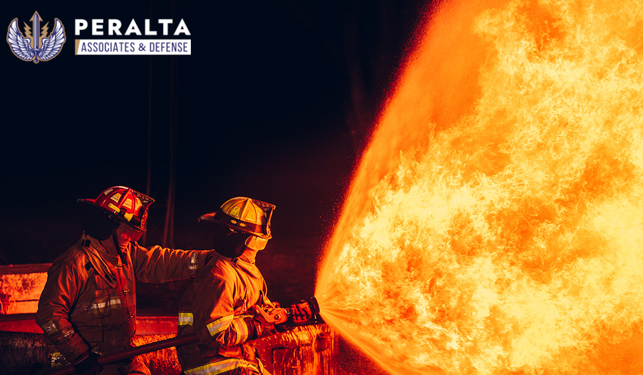
When sprinkler systems fail, alarms go down, or hot work begins, code doesn’t pause, and neither does fire risk. Here’s what a professional fire watch program actually involves.
15 min
NFPA 101 fire watch response is required on system impairment
$25B+
in U.S. property losses attributed to structural fires annually
Top 1%
nationally recognized fire watch provider, named by NFPA (2026)
Most businesses never think about fire watch until they need it urgently. A sprinkler system goes offline for emergency repairs. A construction crew begins welding near combustible materials. A dry, windy afternoon raises the wildfire risk index in your area to dangerous levels. In each of these scenarios, the window between a fire starting and a fire becoming catastrophic is measured in minutes, and your automated systems are unavailable.
This is precisely when a professional fire watch program becomes not just a regulatory requirement, but a genuine life-safety necessity.
What triggers the need for fire watch?
Fire watch is required, and in many cases mandated by code, under several specific conditions. The National Fire Protection Association (NFPA) and the International Fire Code (IFC) both establish clear requirements for when fire watch personnel must be deployed. Common triggers include:
System impairment: When a fire suppression or alarm system is taken offline, whether for maintenance, repair, or emergency failure, NFPA standards typically require fire watch to begin within 15 minutes. This applies to buildings of virtually every occupancy type, from warehouses to hospitals to high-rise office buildings.
Hot work operations: Welding, cutting, grinding, and other hot work activities generate sparks and heat that can ignite materials far from the point of work. Hot work monitoring requires a trained fire watch officer to be stationed at the work area during operations and for a mandated period afterward, typically no less than 60 minutes, to ensure no smoldering fires develop.
Wildfire threat elevation: For properties in fire-prone regions, particularly across California, Nevada, Colorado, and the broader Western United States, wildfire monitoring provides continuous human observation during elevated risk periods, enabling early detection and rapid coordination with fire authorities before a situation escalates.
Fire compliance requirements: Certain occupancy classifications and jurisdictions require ongoing fire compliance watch as a condition of permitting or operation, independent of any system failure or active fire risk.
In February 2026, Peralta Associates and Defense was named a top fire watch provider in the United States by the NFPA, a recognition of our operational standards, multi-jurisdiction compliance expertise, and commitment to life-safety outcomes.
What a Peralta fire watch officer actually does
A fire watch is only as good as the officer conducting it. This isn’t a passive post, it’s an active, continuous patrol responsibility. Peralta’s fire watch officers are trained to conduct regular, documented patrols of all affected areas, identify conditions that could initiate or accelerate a fire, maintain strict incident logs with timestamps and observations, coordinate immediately with local fire authorities at the first sign of a fire condition, and operate independently of other security duties, fire watch is a sole-duty assignment when required by code.
Every fire watch engagement from Peralta comes with detailed reporting documentation that satisfies the requirements of the Authority Having Jurisdiction (AHJ) in your area, whether that’s a local fire marshal, a state agency, or a federal authority.
Fire watch across industries: who needs it most
While any property can face a situation that requires fire watch, certain industries face elevated frequency and risk. Construction sites, particularly those with active hot work, represent the highest volume of fire watch deployments. Manufacturing and industrial facilities with welding operations, petrochemical or utilities properties with high fuel loads, healthcare facilities where suppression system maintenance is a recurring need, and any high-rise or large commercial building undergoing renovation all represent contexts where a professional fire watch program is a recurring operational requirement, not a one-time event.
Multi-jurisdiction compliance: why it matters
Peralta operates across eleven states, and fire watch requirements vary meaningfully by jurisdiction. What satisfies a fire marshal in California may not meet the documentation standards required in Texas or Colorado. Our fire watch program is built around a thorough understanding of NFPA 101, NFPA 25, IFC Section 901, OSHA fire prevention standards, and the specific local amendments that apply in every market we serve. Clients never need to research compliance on their own, our team handles the regulatory landscape so that your fire watch deployment is fully defensible regardless of jurisdiction.
Wildfire monitoring: a growing necessity in the West
As wildfire seasons grow longer and more intense across the western United States, the demand for professional wildfire monitoring has surged. Peralta’s wildfire monitoring service provides continuous human observation of at-risk properties during Red Flag conditions, providing early detection capability that complements, but does not replace, automated systems. Our wildfire monitoring teams are trained to identify early smoke signatures, coordinate with CAL FIRE and local fire departments, and facilitate orderly evacuations when conditions deteriorate rapidly.